
The Benefits of Sex Education for Healthier, Informed Youth
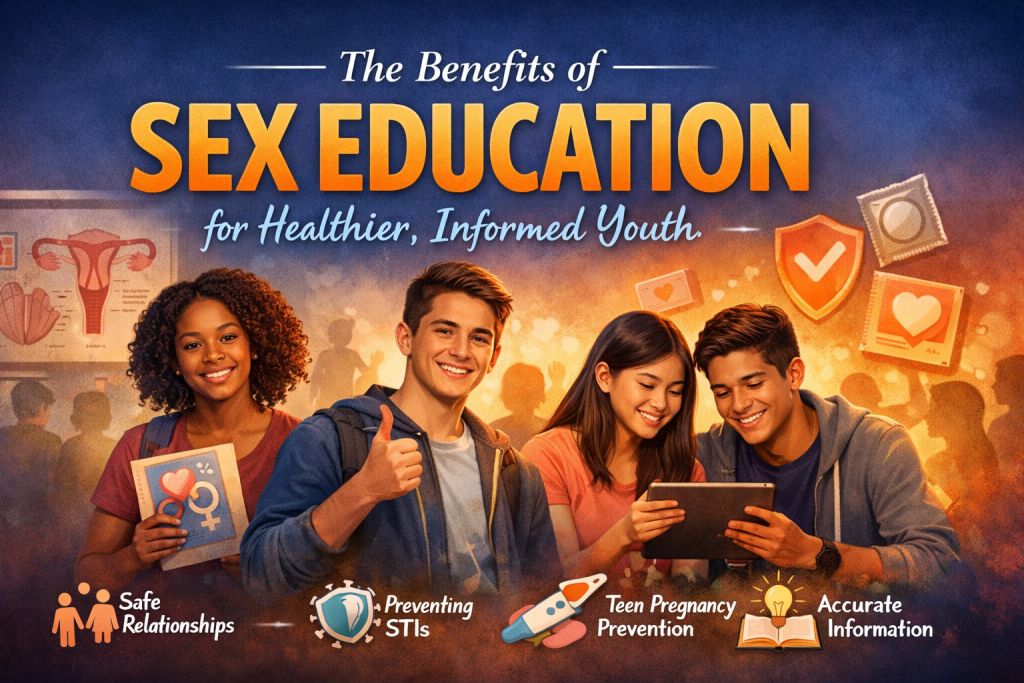
Sex education plays a critical role in shaping healthier, informed, and more responsible young people. In many societies, discussions about sexuality have long been constrained by stigma, misinformation, or moral panic. The result has often been confusion, risky behavior, and preventable health and social consequences among youth. Comprehensive, evidence-based sex education addresses these gaps by providing factual knowledge, practical skills, and ethical frameworks that support informed decision-making. The Benefits of sex education extend far beyond biological understanding; they influence physical health, mental well-being, social responsibility, and long-term life outcomes.
Understanding Sex Education Beyond Biology
Sex education is frequently misunderstood as a narrow focus on sexual activity or reproduction. In reality, comprehensive programs cover a wide range of topics, including human development, relationships, consent, emotional health, gender awareness, sexual orientation, and personal boundaries. This broader scope reflects the reality that sexuality is not only biological but also psychological and social.
By presenting accurate information grounded in science, sex education corrects myths that often circulate through peers, media, or unverified online sources. Youth who lack structured education tend to rely on informal channels that distort facts and normalize harmful behavior. One of the core Benefits of sex education is the replacement of speculation with verified knowledge, reducing fear and confusion.
Effective programs also emphasize values such as respect, responsibility, and empathy. These elements help young people understand the impact of their actions on themselves and others. Education framed in this way does not encourage reckless behavior; it provides context and structure that support self-regulation and informed choices.
Physical Health Benefits and Risk Reduction
A primary and well-documented outcome of sex education is improved physical health. Adolescents who receive comprehensive education show lower rates of sexually transmitted infections (STIs) and unintended pregnancies. This is not coincidental. Knowledge about contraception, disease prevention, and reproductive health directly influences behavior.
Understanding how the body functions allows youth to recognize symptoms, seek medical care earlier, and avoid practices that increase health risks. Education about contraception methods, including their effectiveness and limitations, equips individuals to protect themselves when they become sexually active. Abstinence-only approaches, by contrast, often omit critical information, leaving youth unprepared when abstinence is not maintained.
Another of the significant Benefits of sex education is its role in promoting preventive healthcare. Students learn the importance of regular health check-ups, vaccinations such as the HPV vaccine, and hygiene practices that reduce infection risks. These lessons establish patterns that persist into adulthood, lowering long-term public health burdens.
Mental and Emotional Well-Being
Sexual development is closely linked to mental and emotional health. Without proper guidance, young people may experience shame, anxiety, or distorted self-perception related to their bodies and feelings. Comprehensive sex education addresses these issues directly by normalizing development and providing language to describe emotions and experiences accurately.
Education that includes discussions of self-esteem, body image, and emotional readiness supports healthier psychological development. Youth gain clarity about boundaries and learn that consent and mutual respect are non-negotiable components of any interaction. This clarity reduces internal conflict and emotional distress.
The Benefits of sex education also include a measurable reduction in experiences of coercion and abuse. When young people understand consent and recognize inappropriate behavior, they are better equipped to protect themselves and to seek help when needed. This awareness contributes to lower rates of sexual violence and exploitation, outcomes with profound mental health implications.
Social Responsibility and Relationship Skills
Sex education contributes to the development of responsible citizens by fostering interpersonal skills that extend beyond intimate relationships. Communication, empathy, and respect are core components of effective programs. These skills translate into healthier friendships, family dynamics, and professional interactions.
By addressing topics such as healthy relationships, conflict resolution, and mutual accountability, sex education helps youth understand how power dynamics operate in personal interactions. This understanding reduces tolerance for manipulation or abuse and encourages equitable behavior.
Another important aspect of the Benefits of sex education is its role in reducing discrimination and stigma. Inclusive education that acknowledges diverse identities and experiences promotes social cohesion. Youth exposed to accurate information about gender and sexual diversity are less likely to engage in bullying or exclusion, creating safer learning environments.
Academic and Economic Impacts
The influence of sex education extends into academic performance and economic stability. Unintended pregnancies and untreated health issues often disrupt education, limiting future opportunities. By reducing these risks, sex education indirectly supports higher graduation rates and workforce participation.
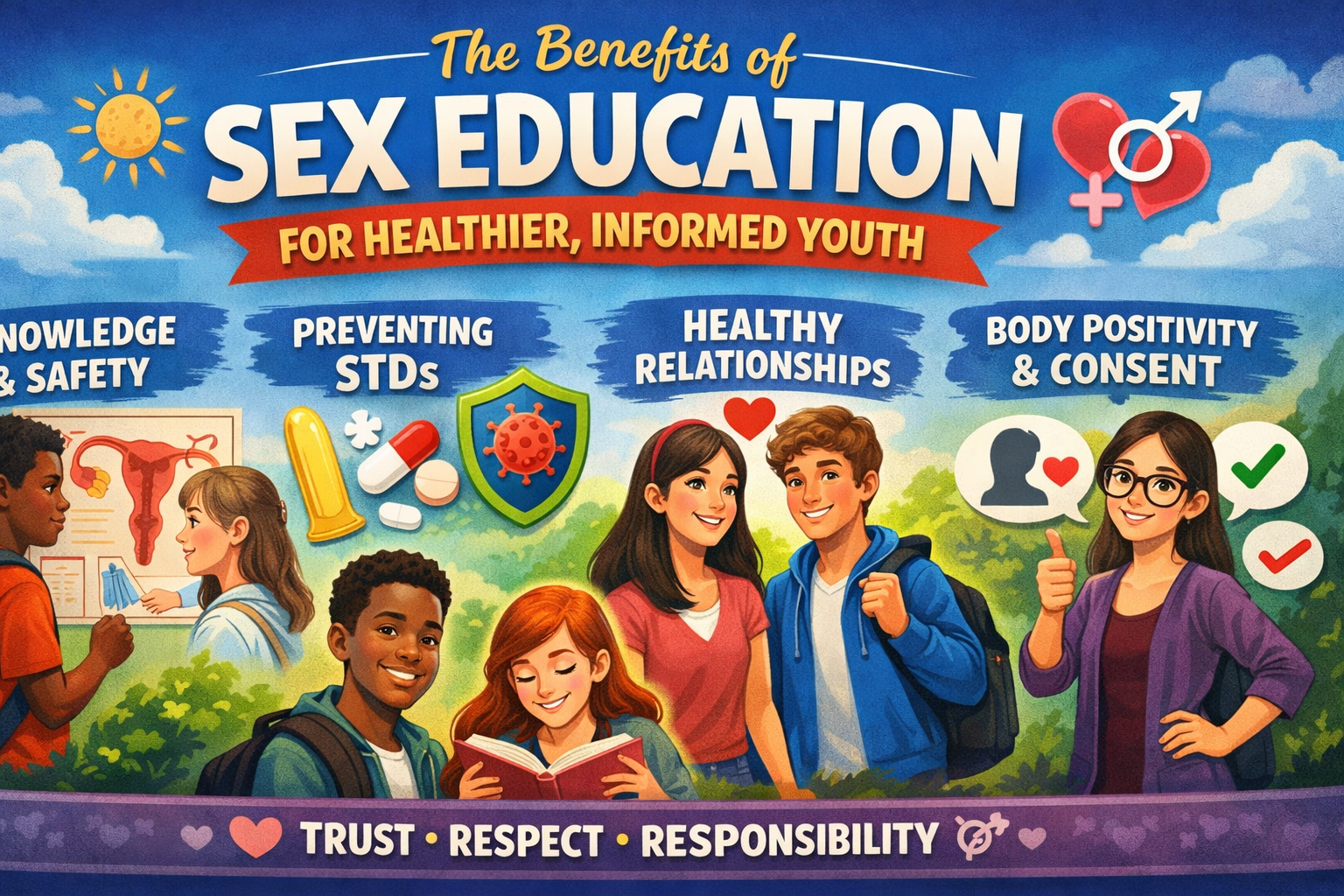
Young people who can plan their futures with accurate knowledge are better positioned to pursue long-term goals. Education about reproductive health enables informed life planning, which correlates with improved economic outcomes. These effects demonstrate that the Benefits of sex education are not confined to personal health but contribute to broader societal productivity.
Public investment in comprehensive programs has also been shown to reduce healthcare costs associated with preventable conditions. Lower rates of STIs and unintended pregnancies translate into reduced strain on public health systems. This cost-effectiveness strengthens the case for integrating sex education into standard curricula.
Media Literacy and Critical Thinking
In an era of pervasive digital content, youth are constantly exposed to sexualized media that often presents unrealistic or harmful narratives. Sex education provides tools for media literacy, enabling students to critically evaluate what they see and hear.
By distinguishing between entertainment and reality, young people learn to question stereotypes and reject misinformation. This critical capacity is a key component of the Benefits of sex education, as it empowers youth to make decisions based on evidence rather than pressure or fantasy.
Critical thinking skills developed through education also support resilience against peer pressure. When individuals understand their values and the consequences of actions, they are less likely to engage in behavior that conflicts with their well-being.
Cultural Sensitivity and Ethical Frameworks
Effective sex education respects cultural contexts while maintaining a commitment to accuracy and human rights. Programs that balance cultural sensitivity with scientific integrity achieve higher acceptance and impact. This balance ensures that education supports community values without compromising essential information.
Ethical discussions within sex education address responsibility, mutual respect, and accountability. These discussions provide a moral framework that guides behavior even in complex situations. The Benefits of sex education include the cultivation of ethical reasoning related to intimacy, consent, and respect for others.
When youth are encouraged to reflect on values and consequences, they develop a stronger sense of personal responsibility. This internalization of ethics reduces reliance on external enforcement and promotes self-governance.
Long-Term Societal Outcomes
The cumulative effects of sex education shape societal health over generations. Lower rates of violence, improved gender equality, and healthier families are among the long-term outcomes associated with comprehensive programs. These outcomes reinforce social stability and trust.
Educated individuals contribute to communities with a clearer understanding of rights and responsibilities. The Benefits of sex education thus extend into civic life, influencing attitudes toward equality, justice, and public health policy.
Societies that prioritize education over silence demonstrate higher levels of transparency and resilience. By addressing sexuality as a natural aspect of human life, these societies reduce the harms associated with ignorance and taboo.
Conclusion
The Benefits of sex education are extensive, measurable, and multidimensional. Comprehensive, accurate education supports physical health, mental well-being, social responsibility, academic success, and economic stability. It equips youth with the knowledge and skills required to navigate complex personal and social landscapes with clarity and confidence.
Sex education is not a peripheral or optional component of learning. It is a foundational investment in human development and public health. When implemented with rigor and integrity, it produces healthier individuals and more resilient societies.
