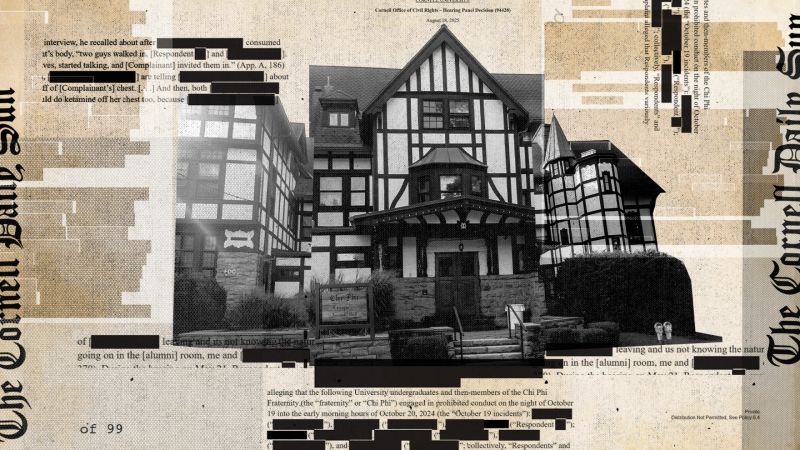
A timeline of the Cornell gang rape allegations

Daftar Isi
Cornell allegations prompt renewed scrutiny of campus sexual assault response
Activelifezero.com – A civil lawsuit alleging a 2024 gang rape at a Cornell University fraternity house has led to a reopened investigation and intensified attention on how universities, police departments and prosecutors handle sexual assault claims.
The 101-page complaint, filed September 16 by a former Cornell student identified as Jane Doe, describes events that allegedly took place during her first year at the Ivy League university. It names Cornell, its police department and several individuals as defendants, while raising questions about evidence collection and the handling of the original inquiry.
New York Attorney General Letitia James is now serving as special prosecutor in the matter. Her appointment followed Gov. Kathy Hochul’s statement that she had “lost faith” in the county district attorney’s ability to continue overseeing the investigation.
The case has also drawn attention to the experience of students navigating Greek-life social settings, alcohol use and campus safety systems far from home.
A freshman seeking community
Doe arrived at Cornell as an 18-year-old freshman living more than 1,000 miles from her home. The lawsuit says she entered college with the hopes, uncertainty and expectations common to students beginning a major new chapter of their lives.
That fall, she joined the Alpha Beta chapter of Delta Delta Delta, commonly known as Tri-Delta. The complaint says the sorority’s promise of sisterhood, long-term friendships and a built-in social community appealed to a student adjusting to life away from home.
Doe lived in the sorority house on campus. The filing notes that Greek membership was promoted by the university as a “vital” element of student life.
The evening of the alleged assault
The lawsuit traces the events to a night in 2024 that began at the Tri-Delta house. Before 8:30 p.m., Doe drank vodka there until she was intoxicated, the complaint says.
At roughly 8:30 p.m., she took an Uber with the sorority’s house mother to a bar in Ithaca for a Tri-Delta event. About 30 minutes later, a bouncer marked an X on both of Doe’s hands to indicate that she was under 21. Despite that designation, the lawsuit says she was served at least one drink inside.
At about 10 p.m., Doe and other sorority members walked to another nearby bar. She received a wristband showing that she was under the legal drinking age.
Near 11 p.m., she left that second bar by herself and walked to the Chi Phi fraternity house to visit a friend. That man was later named as a defendant in the civil case.
The complaint says Doe was visibly intoxicated by the time she arrived, having consumed roughly 10 standard drinks over the preceding three hours.
“When Plaintiff arrived at XI CHAPTER’s fraternity house, Plaintiff was visibly intoxicated as she had consumed about 10 standard drinks within the past 3 hours,” the complaint says.
Allegations inside the fraternity house
Once inside, the lawsuit alleges that Doe was given a beer by her friend and that they danced before he suggested a threesome. The complaint says he then brought her to another room in the house.
In that room, Doe alleges that her friend and another fraternity member pressured her to snort a substance described as ketamine and supplied additional alcohol. The suit alleges that both men sexually assaulted her while she was unable to consent. It also states that one of the men slapped her buttocks, leaving bruising.
A six-page statement Doe signed for Cornell police described a distinction between parts of the initial encounter she felt “pretty ok” about and later activity to which she did not consent. She said intoxication prevented her from making decisions.
“I felt like I was unable to make any decisions because of how intoxicated I was,” she said in the statement.
Doe placed her level of intoxication at one point at an “8 out of 10,” describing it as the most intoxicated she had ever been.
The civil complaint further alleges that, after the initial encounter, a third fraternity member entered the room and sexually assaulted Doe without her consent.
Snapchat messages and the renewed investigation
At approximately 1:42 a.m., one of the men allegedly sent a message to the fraternity’s “Chi Phi Actives” Snapchat group stating there was “free p*ssy” upstairs. The lawsuit characterizes the post as an invitation for other members to enter the room. A photograph of part of that chat was included in the legal filing.
Additional Snapchat messages show Doe in an image inside a room at the fraternity house. The complaint alleges that more fraternity members subsequently entered, pressured her to take additional ketamine and subjected her to further abuse.
The allegations have made the evidence available to investigators a central issue. The county district attorney has said that, before deciding not to file charges, he received Snapchat messages from the night and a six-page investigative report. The emergence of additional material has raised questions about what information was collected, what was shared with Cornell police and prosecutors, and whether the first investigation fully examined the evidence.
Why the case matters beyond Cornell
The reopened inquiry illustrates the high stakes of campus sexual assault investigations. These cases can involve overlapping responsibilities among a university, campus police, local law enforcement and prosecutors, with each institution potentially holding different records, witness accounts or digital evidence.
For students, the case underscores the importance of clear reporting channels and thorough investigative procedures when allegations involve off-campus social organizations connected to campus life. It also highlights how digital communications may become significant evidence in determining the sequence of events and the actions of those involved.
The lawsuit remains a set of allegations in civil court, and the renewed criminal investigation has not resolved the claims. James’s appointment as special prosecutor means the matter will receive a fresh review outside the office that initially chose not to bring charges.
As the process continues, the case is likely to remain a test of institutional accountability for Cornell, local authorities and the systems intended to protect students reporting sexual violence.
Related Reading
Frequently Asked Questions
What is A timeline of the Cornell gang?
A timeline of the Cornell gang is the main topic of this guide. The article explains the context, practical details, and next steps readers should understand.
Why does A timeline of the Cornell gang matter?
A timeline of the Cornell gang matters because readers are looking for a useful answer, not just a short summary. Good content should match search intent and help them decide what to do next.