Hong Kong democracy activist Joshua Wong faces longer prison sentence after second national security guilty plea

Daftar Isi
Joshua Wong Pleads Guilty in Second National Security Case, Extending His Imprisonment in Hong Kong
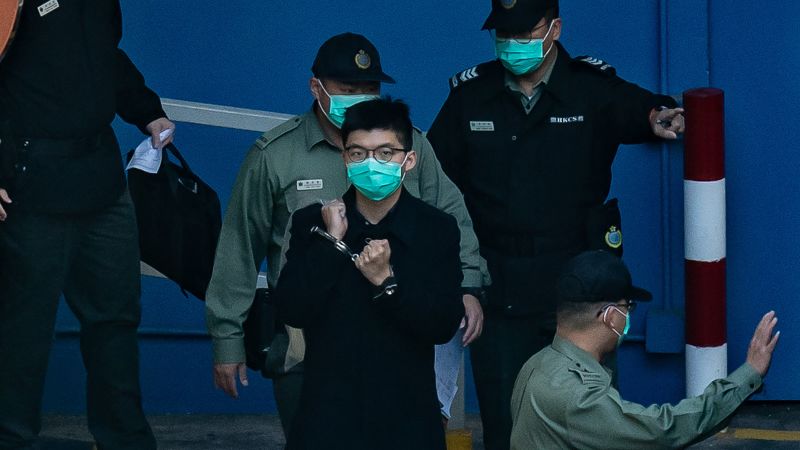
Activelifezero.com – The man who first grabbed global attention at fifteen years old by leading schoolchildren in sit-in protests now faces the possibility of spending many more years behind bars. Joshua Wong, 29, entered a guilty plea on Wednesday to a fresh national security charge that prosecutors say involved coordinating with fellow activists to draw foreign sanctions onto China and Hong Kong during 2020 — the same year Beijing enacted the sweeping national security legislation that critics argue froze political freedoms across the territory.
Wong is already incarcerated, serving a four-year-and-eight-month term handed down after his 2024 guilty plea in a landmark subversion trial. His scheduled release date had been set for January. The new charge, heard at Hong Kong’s High Court where judges can impose sentences stretching to life imprisonment, effectively resets that timeline and pushes his freedom further into an uncertain future.
The Charge: Lobbying for Foreign Sanctions
Prosecutors outlined the case before a judge appointed by the government specifically to adjudicate national security matters. According to the prosecution’s account, before the National Security Law (NSL) took effect, Wong aligned himself with other activists in a coordinated effort to push Washington toward legislation authorizing sanctions against Hong Kong and mainland China. That effort unfolded through social media campaigns and face-to-face meetings with American politicians, including former House Speaker Nancy Pelosi and then-Senator Marco Rubio. The group also lobbied governments beyond the United States to impose their own punitive measures.
Prosecutors described the operation under the internal label “International Battlefront” and argued it persisted well after the NSL came into force. They pointed to the fact that the United States subsequently sanctioned more than a dozen Hong Kong and Chinese officials in the period following 2020 as evidence the plan bore fruit.
Mitigation and Sentencing
In mitigation, Wong’s counsel, Derek Chan, reminded the court that his client had already accumulated six years of consecutive imprisonment across multiple charges, to each of which he had pleaded guilty.
“He has had a lengthy opportunity to reflect on his action, to reflect on the path that he took,” Chan told the judge.
Chan acknowledged the statutory ceiling on the sentence could reach ten years but pressed the court to halve that figure, asking for a term that
“gives the defendant some hope and a future to look forward to that will not be crushing.”
The judge adjourned the matter, reserving sentencing for a later date.
As bailiffs escorted Wong from the dock, the bespectacled former student leader turned toward the public gallery and waved, calling out “Bye bye” to those watching.
Government Response and Courtroom Atmosphere
A Hong Kong government spokesperson moved quickly to blunt any international criticism of the prosecution, framing the case as a matter of domestic law rather than political repression.
“The lawful exercise of free speech must not be conflated with taking actions to collude with a foreign country to impose ‘sanctions’ to harm one’s own country,”
the spokesperson stated.
Security around the court complex was visibly heavy. Officers registered and searched dozens of people queuing outside before admitting them. Inside, limited seating meant supporters rotated through the gallery in small groups, each catching a brief glimpse of Wong before waving and stepping aside for the next batch.
Among those waiting was Gloria Cheng, 32, a friend of the activist. She drew attention to the broader pattern of prosecutions targeting opposition figures.
“This is not the first time for him and there were others before him,” Cheng said. “It really shows the state of affairs in Hong Kong now.”
Another visitor, Louis Lee, who had been meeting Wong regularly in jail, described how the activist maintained morale through studying, physical exercise, and learning to play the guitar. Lee said Wong was devastated upon learning he had been charged with a national security offense for the second time.
“We are very upset because no one would like to spend another day in prison,” Lee said.
From Schoolyard Protests to International Stage
Wong’s public career began in 2012, when at just fifteen he organized sit-in demonstrations with classmates that successfully forced the government to scrap a plan to introduce Chinese civic education into Hong Kong schools. Critics at the time warned the proposed curriculum amounted to Beijing propaganda. Under the NSL now in force, that curriculum has become compulsory in every school across the territory.
Two years later, in 2014, Wong emerged as one of the principal leaders of the Umbrella Movement, a campaign that drew thousands of predominantly young demonstrators into the streets for 79 consecutive days of road blockades demanding greater democratic representation. His forceful public speaking and ability to mobilize large crowds made him a recognizable face of that generation’s struggle.
Beijing officials have since branded Wong and his fellow pro-democracy figures as “separatists.” The national security law, enacted in the aftermath of the massive and at times violent 2019 protests that shook the international financial hub, tightened mainland oversight of Hong Kong’s former British colony status. Both governments maintain the legislation has helped “restore” stability. Rights organizations counter that it has suppressed dissent and rendered even mild criticism of the government a risky undertaking.
Wong’s second national security conviction underscores how the NSL’s reach extends beyond overt acts of rebellion into the realm of diplomatic lobbying and foreign engagement — activities that, under the statute’s broad definitions, can be recast as threats to state security. For observers watching Hong Kong’s shrinking space for political expression, the case signals that even post-conviction advocacy, conducted from abroad or through allied legislatures, remains within the law’s ambit. The sentencing date, yet to be announced, will determine whether Wong’s next years are spent in a cell or, eventually, back in a society that has grown markedly less tolerant of his voice.
Related Reading
Frequently Asked Questions
What is Hong Kong democracy activist Joshua Wong?
Hong Kong democracy activist Joshua Wong is the main topic of this guide. The article explains the context, practical details, and next steps readers should understand.
Why does Hong Kong democracy activist Joshua Wong matter?
Hong Kong democracy activist Joshua Wong matters because readers are looking for a useful answer, not just a short summary. Good content should match search intent and help them decide what to do next.