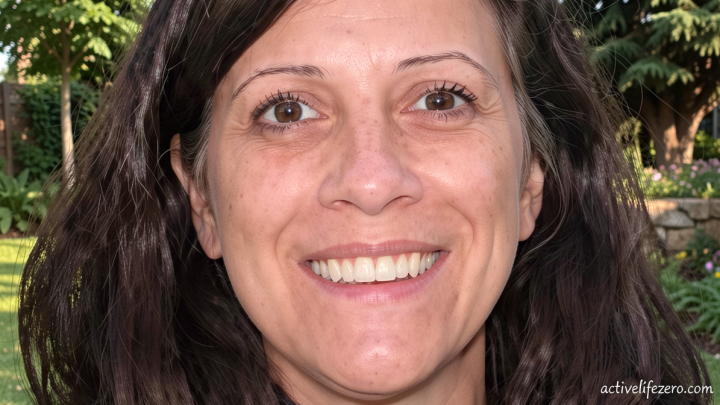
Milo Yiannopoulos says he was ‘terrified’ by the ‘brutality’ of his ICE deportation

Daftar Isi
British Commentator Deported by ICE After Overstaying Visa, Calls Experience “Physically Degrading”
Activelifezero.com – Milo Yiannopoulos, the 41-year-old British-born media figure who spent years championing aggressive border enforcement from American platforms, found himself on the receiving end of that very machinery last week. Detained at a Louisiana airport by agents of Immigration and Customs Enforcement after exceeding the permitted duration of his visa, he was shackled, processed at a federal facility, and flown back to the United Kingdom within roughly 24 hours. The Department of Homeland Security confirmed the sequence of events, noting that Yiannopoulos had entered the country legally on May 14, 2019, but failed to maintain valid status.
The episode has drawn sharp attention not merely because of Yiannopoulos’s public profile, but because of the stark contradiction between his past rhetoric and his personal experience. For months before his own removal, he had used his X account to urge the current administration to ramp up mass deportations. In a June 2025 post, he wrote:
“There is one concrete thing we must insist on this administration delivering. We have got to deport millions and millions and millions of people. Without that, nothing else matters.”
Now, having passed through the system he once advocated, his public tone has shifted noticeably.
Chained Hands, Chained Feet: Details From the Interview
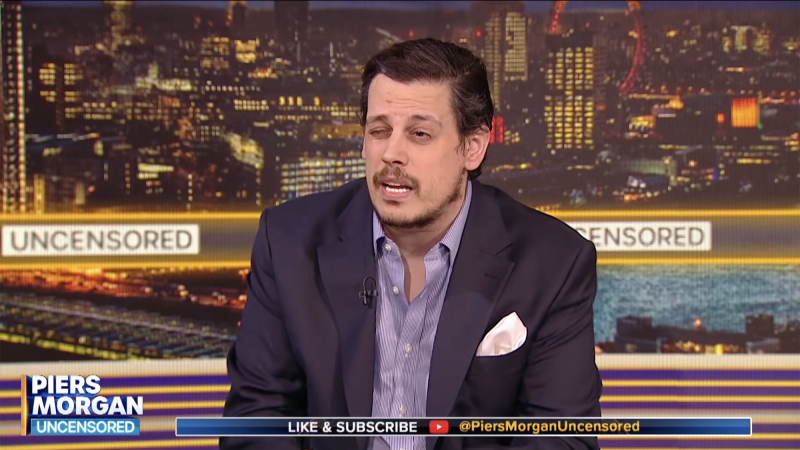
In a conversation with television interviewer Piers Morgan, released on YouTube on Tuesday, Yiannopoulos described the physical reality of his detention in unusually blunt terms. He explained that agents had fastened manacles to both his wrists and his ankles simultaneously, binding his limbs together in a configuration he said caused considerable pain.
“It hurts a lot more than it looks like on television,” he told Morgan.
He went on to describe the overall episode as “humiliating,” “disorienting” and “physically degrading,” adding that the fear he felt was unlike anything he had previously experienced.
“It was frightening, and I don’t think I’ve ever been frightened like that before.”
Yiannopoulos also reflected on what he perceived as a systemic dimension to the encounter. Speaking about the institutional framework within which such detentions operate, he said:
“I didn’t really understand the physical reality of how institutionalised the brutality is in America.”
A Career Built on Controversy
Yiannopoulos rose to prominence in American conservative media circles beginning around 2015, writing for the far-right outlet Breitbart News and building a reputation for provocative speeches and online commentary. He became one of Donald Trump’s most vocal early supporters during the 2016 presidential campaign, frequently appearing at rallies and media events across the country. His relationship with the former president was so close that he occasionally referred to Trump with the affectionate nickname “Daddy” in public appearances.
After leaving the White House in 2017, he continued to operate as an independent commentator and podcaster, maintaining a large following among right-wing audiences. His presence at speaking engagements and his social-media output kept him visible in American political discourse well into the current administration’s tenure.
Ashamed, and Questioning the Deportation Drive
In the same Morgan interview, Yiannopoulos said he felt “very ashamed” of having backed Trump’s agenda so enthusiastically. He also raised what he framed as a practical critique of how ICE has been executing its mandate under the current administration.
“ICE is supposed to be deporting criminals,” he said. “And they’re not doing that.”
He suggested that the agency’s resources and attention have been directed toward lower-priority cases rather than toward individuals with serious criminal records, a criticism that echoes concerns voiced by some immigration-law scholars and even certain Republican commentators who have questioned the prioritization framework.
A Newfound Empathy
Perhaps the most striking element of the interview was Yiannopoulos’s acknowledgment that his own detention altered his emotional response to others’ accounts of ICE encounters. He admitted that he had previously dismissed or minimized trauma narratives shared by people caught up in immigration enforcement.
“I think maybe, in the past, I’ve been a little bit blase when people talked about their trauma,” he said. “But I get it now, and I wouldn’t wish it on anyone.”
That admission lands with particular force given his earlier posts calling for the removal of “millions” of residents. The juxtaposition has generated widespread commentary on social media, with critics noting the irony of a figure who once framed mass deportation as a non-negotiable imperative now describing his own brief passage through the system as terrifying and degrading.
Broader Context
The current administration has made large-scale deportation a central pillar of its domestic agenda, authorizing expanded ICE operations, increased detention capacity, and streamlined removal proceedings. Critics have long argued that the physical conditions of detention — including the use of restraints, limited access to counsel, and rapid processing timelines — can be psychologically and physically taxing even for individuals who entered the country legally and are being removed for technical visa violations rather than criminal conduct. Yiannopoulos’s account, while brief in duration, offers a rare first-person description from a high-profile figure of what that process feels like from the inside: the cold metal of manacles, the disorientation of being moved between facilities, and the loss of personal agency during transit.
His deportation also underscores a practical point that immigration attorneys frequently raise: visa overstays, even when unintentional, can trigger mandatory detention and removal without the opportunity for a full hearing. The distinction between a criminal alien and a civil-status violation is, in practice, often collapsed into a single pipeline of handcuffs, transport, and a one-way flight home.
Yiannopoulos returned to the United Kingdom the day after his Louisiana airport detention. He has not indicated whether he intends to seek re-entry to the United States or to continue his media work from abroad.
Related Reading
Frequently Asked Questions
What is Milo Yiannopoulos says he was terrified?
Milo Yiannopoulos says he was terrified is the main topic of this guide. The article explains the context, practical details, and next steps readers should understand.
Why does Milo Yiannopoulos says he was terrified matter?
Milo Yiannopoulos says he was terrified matters because readers are looking for a useful answer, not just a short summary. Good content should match search intent and help them decide what to do next.