Ancient DNA reveals clues about mysterious ‘Golden Man’ and rise of the Scythian elites

Daftar Isi
Genetic Evidence Confirms Hereditary Power Among Scythian Steppe Elites
Activelifezero.com – For centuries, archaeologists have marveled at the lavish burial mounds dotting the vast grasslands of Central Asia, monuments to a warrior culture whose political architecture remained largely opaque. A new study published in Science Advances on Friday dismantles that opacity by demonstrating, for the first time through direct genomic evidence, that the highest-ranking members of Scythian society passed their authority down through bloodlines. The work, led by Ainash Childebayeva of the University of Texas at Austin, traces family links among elite individuals buried across a wide swath of the Eurasian Steppe and shows that social rank was not earned through individual achievement alone but was inherited, much like a throne.
The Warriors of the Iron Age Steppe
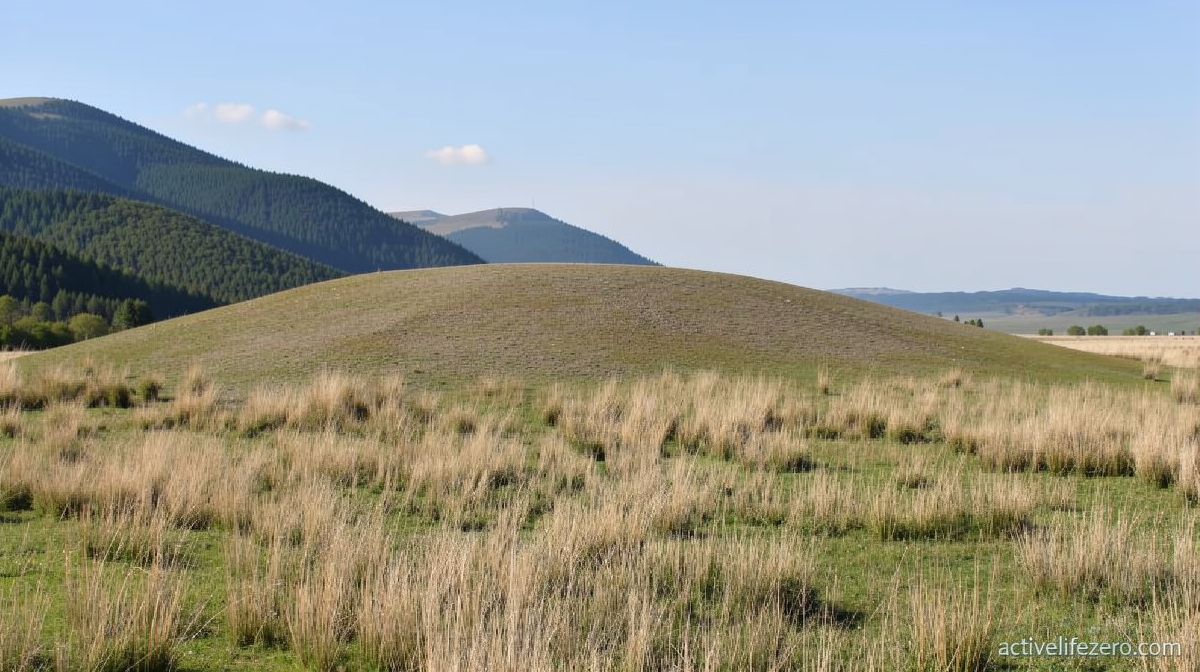
The Scythians were a confederation of nomadic horsemen who dominated the steppe corridor stretching from modern-day Kazakhstan westward into Ukraine during the Iron Age, roughly from the eighth century BC onward. Their society was organized around a warrior aristocracy whose members were interred in enormous earthen mounds known as kurgans. These structures could reach heights of 49 feet (15 meters) and diameters of 345 feet (105 meters), and their interiors often contained corridors, catacombs, and side chambers housing the remains of sacrificed animals or deceased relatives. The scale of these monuments signaled that whoever was buried within occupied a position of extraordinary prestige.
Among the most celebrated of these elite interments is the so-called “Golden Man,” a young individual whose kurgan was excavated in 1969 at a site in Kazakhstan. The burial, dating to approximately 400–300 BC, yielded iron weapons, bronze implements, a silver bowl, and more than 4,000 gold ornaments — a treasure trove that made the find one of the most spectacular archaeological discoveries of the twentieth century. Yet despite the nickname’s gendered implication, scholars had long debated whether the youth was male or female.
Resolving the Golden Man’s Identity
The new genomic analysis settled that question. Researchers examined DNA markers distributed across the entire genome of the Golden Man, applying statistical imputation techniques to reconstruct segments where the ancient material was degraded or missing. The resulting profile indicated that the individual was almost certainly genetically male. Further comparison with other Scythian genomes placed him within a southern subgroup referred to in classical texts as the Saka, a branch of the broader Scythian-speaking world.
Mapping Elite Lineages Across the Steppe
The study drew on DNA samples and associated archaeological data from 85 individuals: 38 from elite burials and 47 from non-elite contexts. A central finding was that elite genomes displayed elevated levels of runs of homozygosity — stretches of adjacent genetic markers identical on both parental chromosomes, signaling recent common ancestry. Their genomes were measurably more homogeneous than those of non-elites, suggesting that high-status individuals constituted a genetically distinct subgroup within the broader population.
“Highlighting the potential role of the elites in maintaining continuity during the time of intense genetic mixture,” the authors wrote, noting that while Iron Age populations overall were more genetically diverse than their Bronze Age predecessors, the elite stratum appeared to resist that diversification by preferentially intermarrying within their own kinship networks.
Perhaps the most striking example of dynastic continuity involved the kurgans of an elite man and his grandchildren, discovered at separate cemeteries more than 60 miles (nearly 100 kilometers) apart. The geographic separation, combined with the richness of both burials, pointed unmistakably to a hereditary claim on power. One of the grandchildren who received an elite interment was only one year old at death.
“And to me that was also a sign that this status was hereditary,” Childebayeva said. “If the status were earned, a one-year-old would not qualify.”
Preserving Bodies for Elaborate Rites
Many remains recovered from elite kurgans bore traces of mummification or postmortem trepanation — the surgical removal of brain tissue through a drilled cranial opening. Childebayeva explained that such preservation measures were practical necessities: constructing a monumental mound or transporting a body to a designated burial site could take considerable time, during which decomposition would render the corpse unsuitable for the elaborate rites the family intended.
“It would make sense if one had to build a mound to bury this individual, or if they had to be transported to a specific location where they would be buried,” she explained.
Expert Reaction and Broader Implications
Alicia R. Ventresca-Miller, associate professor of anthropology at the University of Michigan and associate curator of archaeological sciences at the university’s Museum of Anthropological Archaeology, who was not involved in the research, praised the study’s integrative approach.
“This paper does a fantastic job of integrating genetic, archaeological, and textual findings to support their interpretations of lineage-based status,” Ventresca-Miller said. “An elite system that is lineage-based elites is a very important finding, as wealth was passed down across generations.”
The implication extends beyond the Scythians themselves. Prior to this work, the Bronze Age populations of the same steppe region showed little evidence of rigid social stratification encoded in the genome. The Iron Age elite pattern documented here marks a qualitative shift: power became a birthright, locked into particular families and transmitted across generations alongside material wealth. Understanding when and how that transition occurred reshapes narratives about the origins of state-level inequality across Eurasia and offers a genomic benchmark against which other steppe and pastoral societies can be compared.
The findings also underscore the growing capacity of ancient DNA to answer questions that purely archaeological or textual methods could not resolve — questions of sex, kinship, and the biological basis of social rank. As sequencing costs continue to fall and preservation techniques improve, the steppe’s buried archives promise further revelations about how power was made, maintained, and ultimately contested across millennia of nomadic history.
Related Reading
Frequently Asked Questions
What is Ancient DNA reveals clues about mysterious?
Ancient DNA reveals clues about mysterious is the main topic of this guide. The article explains the context, practical details, and next steps readers should understand.
Why does Ancient DNA reveals clues about mysterious matter?
Ancient DNA reveals clues about mysterious matters because readers are looking for a useful answer, not just a short summary. Good content should match search intent and help them decide what to do next.