‘No one can understand the pain:’ Fire in maternity ward kills at least 14 newborn babies in Pakistan’s capital

Daftar Isi
Maternity Ward Blaze in Islamabad Claims at Least 14 Newborn Lives
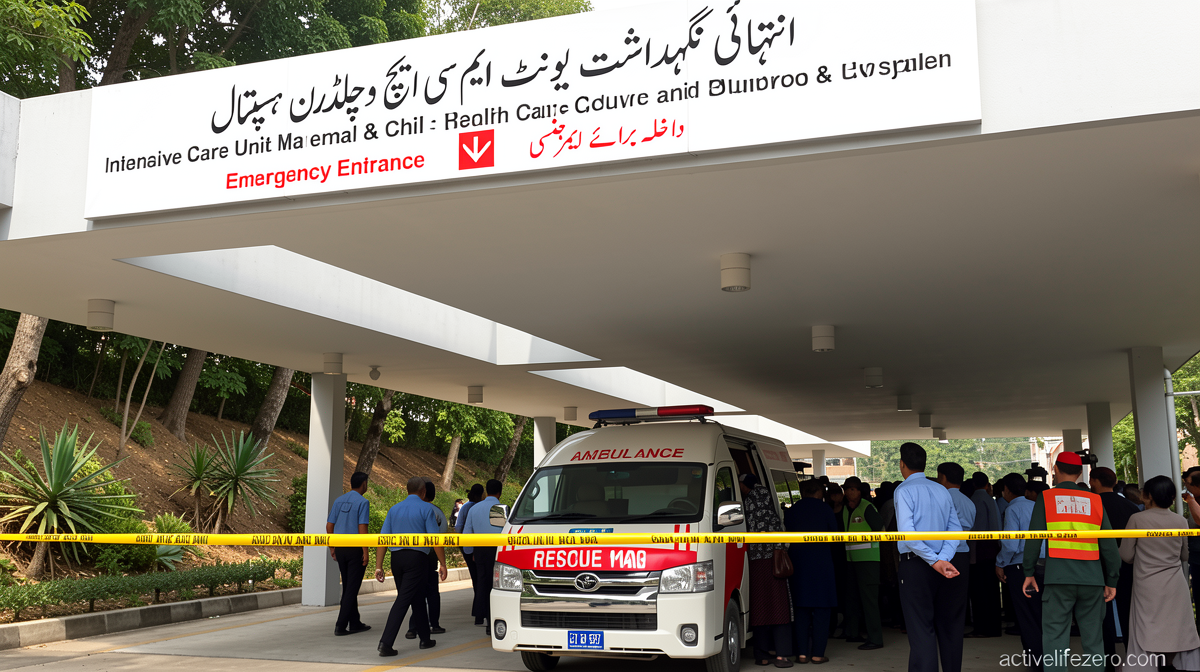
Activelifezero.com – A devastating fire that engulfed a newborn nursery at Pakistan’s largest government hospital in the capital killed at least 14 infants on Wednesday morning, marking one of the worst hospital disasters in the country’s recent history. The blaze erupted at approximately 7 a.m. local time inside the maternity unit of the Pakistan Institute for Medical Sciences (PIMS), a sprawling government-run complex in Islamabad. Rescue personnel indicated the ignition source was an explosion in an air conditioning compressor unit located within the nursery where the babies were being kept. Of the 16 infants present in the ward at the time, only a single child was pulled to safety by hospital staff.
Grief Outside the Gates
A father whose three-day-old son perished in the flames spoke to reporters gathered outside the hospital grounds, his voice heavy with loss.
“No one can understand the pain I’m going through,” he said.
Muneeba, a visitor who had come to see family members admitted to the hospital, recounted how she managed to get her nephew and sister-in-law out just as flames began spreading through the ward.
“Thank God our baby is safe,” she said.
Locked Doors and Rescue Delays
Multiple witnesses described finding doors locked within the maternity ward, slowing efforts to reach trapped infants. Two officials at Islamabad’s Capital Development Authority (CDA) later explained that hospital management shut the facility’s main gates once the alarm sounded, adding precious minutes to the rescue timeline. The CDA officials said rescue crews arrived at the hospital’s entrance within six minutes of being dispatched at 6:54 a.m., but opening the sealed gates required additional time. Local traffic police eventually assisted in reopening the entrance. Afterward, hospital security staff reportedly directed first responders to the wrong section of the complex, according to the same sources.
The CDA officials noted that in past emergencies, the hospital has sealed its perimeter to prevent surges of anxious relatives and visitors from flooding the grounds — a practice that, while understandable in principle, may have compounded the danger on Wednesday.
A hospital spokesperson pushed back against the gate-closure allegations, labeling them “factually incorrect.” Federal Health Minister Mustafa Kamal, when pressed on the specific claims, responded:
“I am not aware of any such thing; however, an inquiry is going on which will determine the facts.”
Political Fallout and the Question of Accountability
Prime Minister Shehbaz Sharif described himself as “deeply saddened by this tragic incident” and offered condolences to the bereaved families. He directed an immediate inquiry into the cause and circumstances of the fire, pledged “strict action against anyone found responsible,” and removed Aslam Ghauri, a senior official in the federal health ministry, from his post.
In parliament, National Assembly member Sharmila Sahibah Faruqui condemned the disaster in a social media post, calling it “shameful and unforgivable.”
“Heads must roll. Please do not hide behind another inquiry committee,” she wrote. “Those responsible must be taken to task.”
A System Under Strain
Pakistan’s medical landscape is split between private clinics and public hospitals. State-run facilities, which serve the majority of the population that cannot afford private care, have long been criticized for chronic underfunding, staffing shortages, aging electrical infrastructure, and inadequate emergency-response planning. The combination of obsolete wiring, insufficient fire-suppression equipment, and limited trained personnel creates conditions in which a single mechanical failure can escalate into catastrophe within minutes.
Islamabad, as the seat of the country’s political and military leadership, generally hosts better-resourced institutions than smaller cities. PIMS itself occupies a large campus and describes its mission on its website as becoming “a premier research-intensive medical university that will educate medical students, paramedics, and postdoctoral fellows in accordance with international professional standards.” The gap between that stated ambition and the reality of a nursery where locked doors and gate closures delayed the rescue of newborns underscores the scale of the challenge facing Pakistan’s public health sector.
A Recurring Pattern of Fire
Pakistan has endured a series of major conflagrations in recent years, many in settings with outdated wiring and limited fire-safety infrastructure. Earlier this year, a catastrophic blaze at a shopping center in Karachi claimed at least 67 lives. In June 2022, a fire at a children’s hospital in Lahore destroyed thousands of dollars’ worth of pharmaceuticals, local media reported at the time.
Each incident renews calls for modernized electrical systems, mandatory fire-drill protocols, independent oversight of public hospitals, and enforceable building-code compliance — measures that advocates argue remain largely unimplemented despite repeated pledges from successive governments. For the families who lost infants on Wednesday, the question is no longer whether the infrastructure was deficient, but whether anyone will be held to account for the consequences.
Related Reading
Frequently Asked Questions
What is No one can understand the pain?
No one can understand the pain is the main topic of this guide. The article explains the context, practical details, and next steps readers should understand.
Why does No one can understand the pain matter?
No one can understand the pain matters because readers are looking for a useful answer, not just a short summary. Good content should match search intent and help them decide what to do next.