What we know — and don’t know — about what caused the Nepal flood wave

Daftar Isi
Nepal’s Flood Wave: A Cascade of Ice, Rock, and Rising Waters
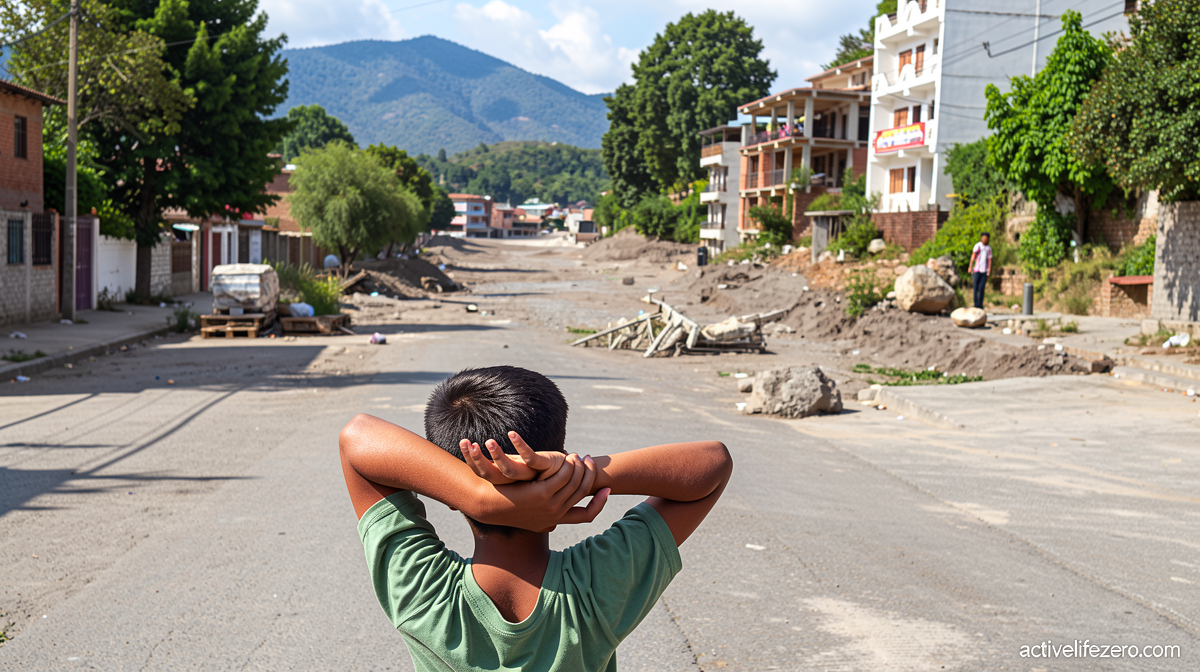
Activelifezero.com – Entire settlements, arterial roads, and critical bridges were obliterated when a wall of floodwater surged through valleys in Nepal and adjacent Tibet, leaving communities in ruins and rescue operations scrambling across damaged terrain. The precise trigger behind that catastrophic surge remains under active investigation, yet the event has sharpened an uncomfortable reality for one of the world’s most climate-vulnerable mountain nations: the forces that built the Himalaya over millions of years are now being dismantled at an accelerating pace.
Nepal sits at the intersection of multiple compounding hazards. Its high-altitude glaciers are retreating, rocky slopes are losing cohesion as permafrost thaws, and monsoon-season rainfall is intensifying. Together, these dynamics create conditions in which a single destabilizing event at elevation can translate, within minutes, into a lethal flood wave hundreds of kilometres downstream.
The Trigger: Earthquake or Landslide?
At 8:37 a.m. local time, the US Geological Survey registered a magnitude-4.4 seismic event along the Nepal–China border, north of Kathmandu. Almost simultaneously, a massive avalanche of ice and rock — functionally a landslide in this context — tore down a mountainside and plunged into the Lhende Khola River, a tributary feeding the Bhote Koshi, which carves its way from the Tibetan Plateau into Nepal through deeply incised gorges.
The causal sequence between the two events is still being untangled. A working group of scientists examining satellite imagery believes the seismic signal was not the cause but the consequence: a colossal fragment of glacier sheared free and dropped into the valley, generating ground vibrations strong enough to register as an earthquake on seismometers.
“The reported earthquake was probably seismic energy released by a landslide,” said Daniel Shugar, a geologist at the University of California, who is part of the team that has analysed the satellite imagery in detail.
Shugar’s group also suspects that a concurrent rockfall mixed with the falling ice, producing a fast-moving debris flow of ice, boulders, and sediment. That composite mass then dammed the river channel briefly before breaking through, unleashing a sudden downstream surge.
“These are cascading hazards,” explained Saswata Sanyal of the International Centre for Integrated Mountain Development in Kathmandu, a regional climate-focused organisation. “What happens in the icy mountains can quickly flood towns downstream.”
A Warming Mountain Range
The mechanics of such cascades are not new to Himalayan geology, but their frequency and severity are climbing. Nepal hosts thousands of glaciers, many of which are thinning and fracturing as regional temperatures rise faster than the global average. The Hindu Kush Himalaya region — of which Nepal forms a core part — has seen glacier ice-loss rates roughly double since the year 2000, placing nearly two million downstream residents at escalating risk.
One particular mechanism of concern is the glacial lake outburst: meltwater accumulates behind natural dams of ice or moraine until the structure fails, sending a torrent of water and debris cascading down steep terrain. Tom Robinson, a senior lecturer at the University of Canterbury in New Zealand, has drawn a useful analogy for the public:
“These glacial dams are no different to constructed dams. If you take the Hoover Dam, for instance, you’ve got a massive lake behind it, but if you suddenly remove the Hoover Dam, that water has to go somewhere, and it’s going to come cascading down a valley in massive flood waves.”
A comparable flood struck the same corridor last year and was traced to a glacial lake outburst in neighbouring Tibet. Whether a similar outburst contributed to this latest event has not been confirmed. Several specialists consider it improbable.
“So far, satellite imagery suggests that no major lakes are upstream of the flood path, indicating that a glacial lake outburst can be excluded,” said Wolfgang Schwanghart, a geomorphology professor at Freie Universität Berlin in Germany.
Weather: Background Noise, Not the Main Actor
Analyses of satellite imagery and ground-station data show no episode of widespread, extreme rainfall in the immediate vicinity during the week preceding the event. Summer monsoon storms did deliver scattered showers to the broader region, and months of snowmelt would have kept river channels running at elevated levels. Those seasonal factors likely primed the system — raising water tables, saturating slopes, and keeping riverbeds near capacity — but they do not appear to have been the proximate trigger.
What Comes Next
For the communities along the Bhote Koshi and its tributaries, the question is no longer whether such cascades will recur but how often and how violently. Nepal’s mountain infrastructure — roads, bridges, hydropower intakes — was designed for a climatic regime that no longer exists. As permafrost retreats and glacier tongues fracture, the probability of large-scale slope failures in the high valleys increases year on year. Early-warning systems, river-channel management, and international cooperation on shared transboundary waterways will need to scale up in step with the hazard.
Until investigators complete their analysis of the seismic, geological, and hydrological record, the full causal chain of this disaster will remain partially unresolved. What is already clear, however, is that the mountain environment in which Nepal lives is changing faster than the institutions and infrastructure built to protect its people can adapt.
Related Reading
Frequently Asked Questions
What is What we know?
What we know is the main topic of this guide. The article explains the context, practical details, and next steps readers should understand.
Why does What we know matter?
What we know matters because readers are looking for a useful answer, not just a short summary. Good content should match search intent and help them decide what to do next.