He was waiting for his son to return from the USS Lincoln. Then Border Patrol arrested him

Daftar Isi
A Handyman’s Errand to the Mechanic Ends in an ICE Holding Cell
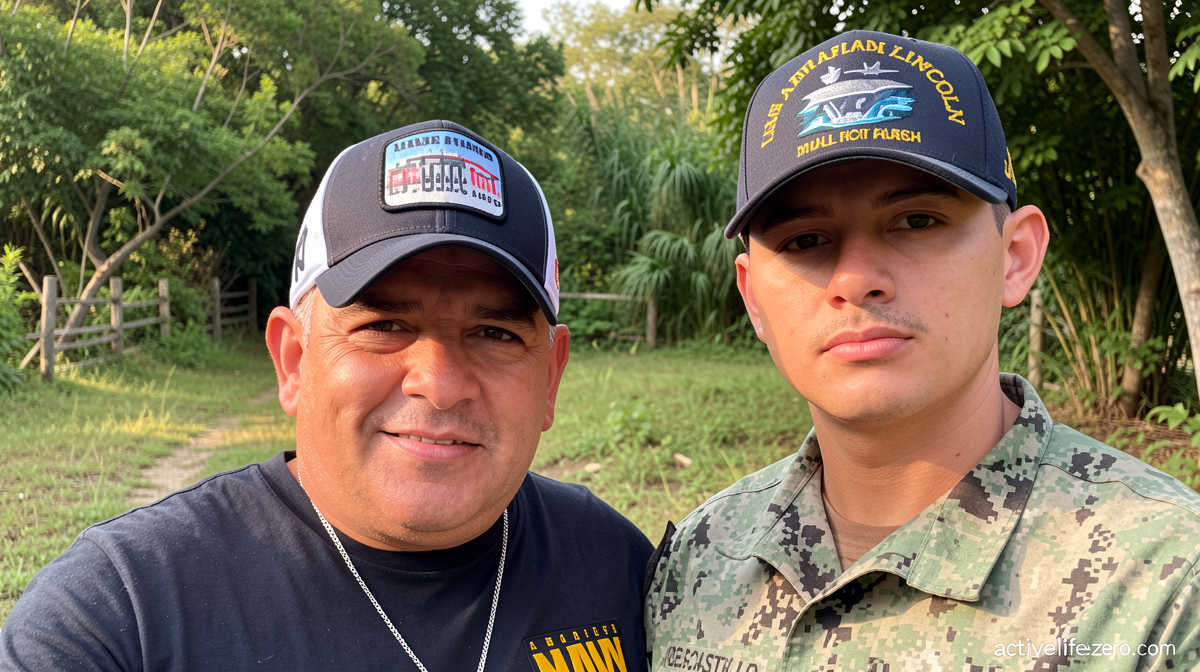
Activelifezero.com – Luis Manuel Aviles stepped out of his Key West, Florida home on a Saturday morning with a simple errand in mind: drop his car at a local repair shop. What he did not expect was that federal immigration agents would be waiting to detain him. His son, Joshua Aviles, was at that moment aboard the USS Abraham Lincoln in the Middle East, more than nine months into a deployment that had already set a U.S. Navy record for continuous time at sea.
The arrest of the 48-year-old Nicaraguan-born handyman lands amid a widening pattern in which parents and spouses of active-duty service members are swept into federal immigration enforcement. In the first systematic accounting of such detentions, at least six family members tied to military households have been deported and one has self-deported. The government does not maintain a public tracker for these cases. In one instance, a spouse who had spent over a month in federal immigration detention was pulled from a deportation flight bound for Brazil after the matter drew public attention.
The Arrest and the Family’s Account
Argelia Aviles, 47, Luis’s wife, described the morning her husband left for the mechanic. She emphasized that he holds a valid work permit in the United States and has resided here for 19 years. His daily routine, she said, revolves around one purpose: earning enough to feed his children.
“He dedicates himself only to work so he can put food on the table at home. He is a good father. He loves his children with all his soul,” Argelia said.
The Department of Homeland Security confirmed in a written statement that Border Patrol agents took Luis Aviles into custody in Key West on Saturday and that he would remain in ICE detention while the government pursues deportation proceedings. The department framed the action in broad enforcement terms.
“Having a family member in the military is not a free pass to violate our nation’s laws,” the department said, adding that the administration “does not pick and choose which laws to enforce.”
Nine Months at Sea: The USS Lincoln Deployment
Joshua Aviles, his father’s son, has been serving aboard the USS Abraham Lincoln in the Middle East. By his own account, he had been working shifts of more than 12 hours for over 250 consecutive days without a break. The vessel’s extended time away from port has generated sustained concern among service members, advocacy groups, and members of Congress over food supply levels, equipment wear, and cumulative psychological strain on crews.
Defense Secretary Pete Hegseth had earlier characterized conditions on the Lincoln as “completely misrepresented.” The Pentagon directed all follow-up questions to the Navy, which did not respond to a Sunday-afternoon emailed request for comment.
Joshua learned of his father’s detention through a phone call on Saturday morning while still at sea. He posted his reaction on Facebook.
“This is heartbreaking for me. I don’t know how I can mentally continue working 12+ hour days knowing that my dad is somewhere, possibly treated like a criminal,” Joshua Aviles wrote.
The Sister’s Perspective and the Cost of Separation
Katherine Delgado, 28, Joshua’s sister, explained that her brother entered the military partly on the assumption that a family member’s active-duty status would strengthen his father’s path to citizenship and end what she described as a constant fear of arrest.
“I spent weeks without knowing where he was,” Delgado said of the deployment’s early days.
Once communication resumed and Joshua told her he was not receiving adequate food aboard ship, she began sending care packages loaded with groceries and hygiene items, spending hundreds of dollars in the process. Some of those packages, she said, never reached him. She referred to Joshua as her “best friend” and her “ride-or-die,” and described the separation as devastating.
Delgado noted that news had emerged the Lincoln would soon be withdrawn from its Middle East posting.
“And he’s gonna come home without his father,” she said.
Policy Context: Military Parole-in-Place and Its Limits
Among the most publicized immigration benefits available to military households is “military parole-in-place,” a mechanism that permits spouses, children, and parents of active-duty service members or veterans to seek lawful status from within the United States rather than departing and reapplying at a consulate. The program, however, carries exclusions. Individuals who overstayed a visa or who previously filed for status at a port of entry, for example, may not qualify. The precise eligibility criteria have become a point of contention as enforcement actions against military families accelerate.
The Trump administration has moved to roll back immigration protections that had previously shielded certain military-connected households from routine enforcement sweeps. The result, as documented in recent reporting, is that dozens of parents and spouses of serving troops have been detained in the past months, with the government declining to publish a consolidated list of those affected.
What Comes Next
For the Aviles family, the immediate question is whether Luis Manuel Aviles will be released, granted some form of relief from removal, or deported back to Nicaragua after nearly two decades of continuous residence. His wife described the emotional toll of the separation: when six months passed without Joshua returning from deployment, Luis was distraught, she said, and had been counting down to the day he could embrace his son after nine months apart.
“He was excited,” she recalled. “He wanted to hug his son, as he hadn’t seen him for nine months.”
That reunion, at least for now, remains suspended in a federal holding cell in Key West while his son finishes out a record-setting deployment thousands of miles away.
Related Reading
Frequently Asked Questions
What is He was waiting for his son?
He was waiting for his son is the main topic of this guide. The article explains the context, practical details, and next steps readers should understand.
Why does He was waiting for his son matter?
He was waiting for his son matters because readers are looking for a useful answer, not just a short summary. Good content should match search intent and help them decide what to do next.